
DStv Dish or DStv Stream? How to Choose in 2026
28 October 2026
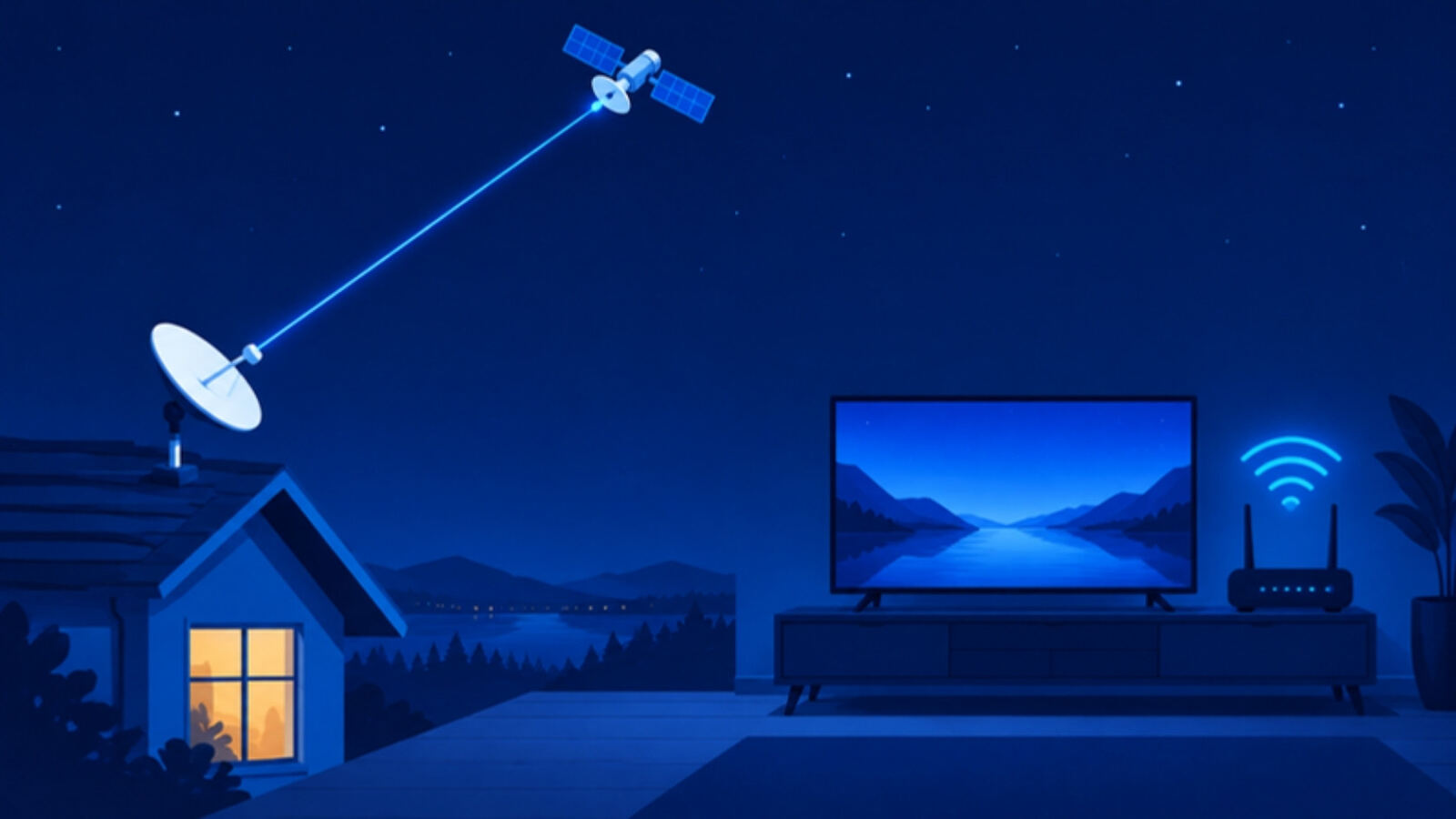
For years, DStv meant a dish on the roof and a decoder in the lounge. That is no longer the only way. Since DStv restructured its packages in September, news reports say each of the main packages can be had either with a decoder and dish, or on DStv Stream, which runs over your internet connection and needs no dish at all.
We install and repair dishes, so we are not neutral. This guide is meant to be fair anyway, and it includes the situations where streaming is clearly the better choice.
What actually changes
With a dish and decoder, the channels come from a satellite to a dish on your roof and down a cable to the decoder. They do not travel over your internet connection, so the TV keeps working when your internet is down.
With DStv Stream, the channels come over your internet connection to a compatible smart TV, streaming device or phone. There is nothing to mount on the roof and nothing to install.
Five questions that decide it
1. How good is your internet?
DStv's own streaming FAQ recommends an uncapped connection, with at least 4 Mbps and about 10 Mbps for HD. Check the current figures on dstv.com, as they can change. On stable, uncapped fibre that is easy. On a capped or patchy connection, which some smaller towns and farms still rely on, streaming for hours a day gets expensive or unreliable.
2. How many TVs, and how many people watching at once?
Streaming usually limits how many screens can play at the same time, and every screen needs enough bandwidth. A dish can feed several TVs through Extra View. Check how many simultaneous streams your package allows before you decide.
3. What happens when the power goes off?
Load shedding affects both options. A dish setup needs power for the decoder and the TV. Streaming needs power for the TV or device as well as your router and, on fibre, the fibre box. If you stream through load shedding you may need a battery backup for all of them. The satellite itself does not depend on your local network being up.
4. How do you watch?
On a phone or laptop, streaming is simple. For live sport on a big screen, think about both sides: how stable your internet is when it is busy, against the chance of a dish dropping out in a heavy downpour. Our guide to why DStv drops when it rains explains the dish side.
5. Is the property lived in all year?
A holiday home or guest house often has no internet outside the season. A dish and decoder just need power, so a property with no broadband for months still works the day you arrive. Streaming needs a live connection every time.
What about the cost?
Prices change, so we will not quote our own numbers. News reports of the September restructure give streaming prices from R99 a month (Starter) up to R799 (Premium), and say satellite pricing did not change (BusinessTech). Confirm the current prices on dstv.com before you decide.
The real comparison is this: a dish has a one-off installation cost, while streaming has none but relies on internet you already pay for. If you have good fibre anyway, streaming adds little. If you would have to buy better internet just to stream, the dish may be cheaper overall.
When streaming is probably the right call
- You rent, or live in a flat where a dish is not allowed
- You have reliable, uncapped fibre
- You watch on one or two screens, or mainly on a phone or laptop
- You want to stay flexible and avoid an installation
When a dish still makes sense
- Your internet is capped, patchy or expensive
- You have several TVs in different rooms
- It is a holiday home, guest house or rental that is often without internet
- You want TV to keep working when the internet is down
- You live somewhere without good broadband, such as a farm or a small coastal town
If you keep your dish
A well-installed dish can run for years. The usual problems are a dish moved by wind, worn cable and connectors, and trees that have grown into the signal path. Our guides on the signs your dish needs realignment and signal strength 100% but quality 0 help you work out what is wrong. If you want it checked, we cover dish alignment in Cape Town and Hermanus, plus the rest of the Western Cape.
Not sure which to choose?
Tell us where you live, how many TVs you run and what you watch, and we will give you an honest answer, even if it is that you do not need us. Contact us or WhatsApp us for a free quote anywhere in the Western Cape.